The Casino in a Film: Setting, Symbol, or Plot Device?
Learn how to read the casino in a film as setting, symbol, or plot device, so you can see what each room, image, and game changes in the story.
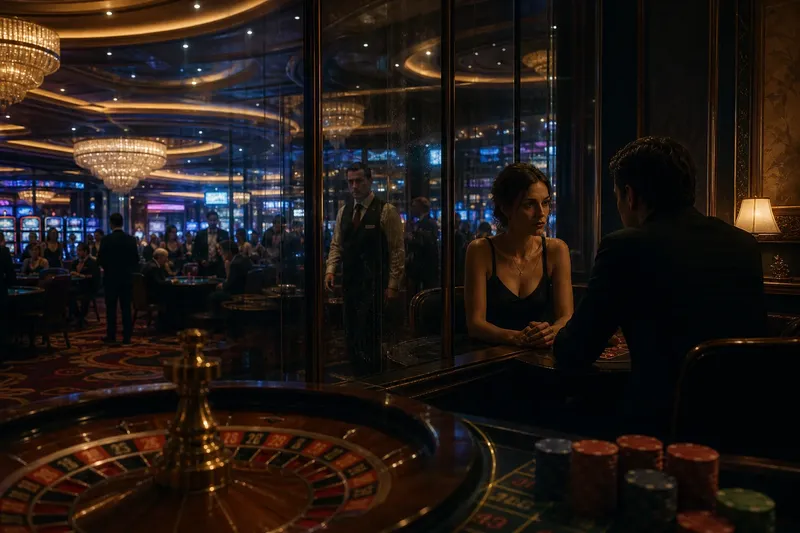
The common mistake in reading a casino in a film is to treat every bright gaming floor as mere atmosphere; that can hide how the room shapes character, meaning, or plot. To decide whether the casino is mainly a setting, a symbol, or a plot device, watch what changes when the characters enter and what would break if the scenes moved elsewhere.
Casino scenes reveal their job through what they change
A casino can perform all three functions, but one usually carries the most weight. As a setting, it gives a scene a particular social and physical environment. As a symbol, it concentrates an idea—risk, appetite, spectacle, or a polished promise of control. As a plot device, it creates events or constraints that propel the story.
These are reading categories, not rigid boxes. A crowded room may establish a setting while its surveillance cameras suggest scrutiny, and a game may then force a character to make a consequential choice. The useful question is which function most strongly shapes the scene’s next beat.
- Setting: The casino supplies rules, people, sounds, and spaces that affect how a scene unfolds.
- Symbol: Its images or rituals give a concrete form to an idea that extends beyond gambling.
- Plot device: A casino event causes a decision, obstacle, revelation, or change in direction.
Try a counterfactual: imagine the same conversation in a restaurant or hotel lobby. If it still works almost unchanged, the casino may be decorative. If the room’s rules, audience, or game make the exchange possible—or make its consequences sharper—the location is doing more than supplying glamour.
Read the casino in a film by tracking the room
Begin with practical details rather than the most striking shot. Notice where entrances and exits sit, whether characters can speak privately, who can watch whom, and how the film distinguishes the gaming floor from corridors, bars, or private rooms. These choices establish the casino as a working environment with boundaries.
Sound can make those boundaries legible. A film may let the clatter and announcements dominate a public area, then quiet them in a private conversation. That contrast can turn a hallway into temporary shelter or make silence feel exposed. Ask what the sound mix permits the characters to hear, conceal, or ignore.
Movement matters, too. A character crossing a room may be watched, delayed, or forced to pass a particular table. If the camera keeps returning to that route, the floor plan may be part of the scene’s tension rather than a neutral backdrop. A casino earns its place as a setting when its layout affects behavior.
Keep this observation modest: a close reading does not require mapping every table or identifying every game. Follow only the details the film emphasizes. A single doorway, a visible crowd, or the division between public and private space may explain why the scene could not happen in quite the same way elsewhere.
Visual patterns can turn a casino into a symbol
To read symbolism, look for repeated images and contrasts. Mirrors can multiply faces; glass can separate spectators from action; a long row of lights can make the floor feel orderly or unreal. None of these details has a fixed meaning by itself. Its significance comes from how the film repeats it and what the surrounding scenes suggest.
Color and framing offer similar clues. A character isolated in a wide shot may seem swallowed by the room, while a tight view of a hand or face can make a crowded casino feel intensely private. Compare those choices with how the film presents the same character outside the casino. The contrast may connect the room to exposure, performance, or self-invention.
Pay attention to the gap between appearance and conduct. A polished setting can frame desperation; a rowdy space can accompany a carefully controlled performance. If the casino’s visual order repeatedly clashes with what characters are doing, that friction may be the symbolic point.
Do not turn every decorative feature into an allegory. A chandelier may simply identify an elegant venue. A stronger case for symbolism emerges when an image recurs, gains emphasis through framing or editing, and connects to a character’s choices or the film’s larger concerns.
Plot function depends on consequences, not on gambling alone
A casino becomes a plot device when something about it makes the story move. The trigger might be access to a restricted room, the arrival of a particular person, a game outcome, or the pressure of acting in public. What matters is not that a wager occurs, but that the event changes what a character can do next.
Trace the chain in plain language: a character enters for a reason; the casino creates an opportunity or obstacle; the character responds; the response produces a new situation. If the scene ends with the same relationships, knowledge, and options as before, the casino may be mostly setting or symbol. If it changes one of those conditions, its plot work is clearer.
Game mechanics can supply a compact source of suspense, but only if the film makes their relevance understandable. A viewer may not need a full explanation of the rules. They do need to know what the character wants, what can interrupt the attempt, and why the outcome matters beyond the result of a single hand or spin.
Consider timing as well. A casino scene can bring several story threads together because characters share a public space, or it can slow events while a character waits for an opening. In either case, notice whether the film uses the venue’s routines and social traffic to arrange a meeting, delay, mistake, or reveal.
Use a scene-by-scene note without overreading
A useful field note records evidence before interpretation. Write down the scene’s immediate purpose, one emphasized detail in the room, and the consequence that follows. Then decide which function—setting, symbol, or plot device—best explains those observations. This keeps the reading anchored to what the film actually shows.
Say you are watching an invented film in which Mara enters a casino to meet her estranged brother. The camera repeatedly frames their conversation through a glass partition, and a staff member interrupts when the brother tries to leave. A concise note might say: “The casino provides a public meeting place; the glass stresses separation; the interruption delays the exit and changes the conversation.” The scene uses all three functions, but the interruption makes plot pressure especially visible.
For a longer sequence, track changes rather than cataloging every image. Does the character move from a public floor to a private space? Does the crowd become more or less present? Does a game begin as background and later become consequential? Those shifts can show the moment when atmosphere takes on narrative work.
It is not worth the effort to assign a hidden meaning to every chip, card, or light. If a detail appears once and has no clear relation to a choice, contrast, or recurring image, leave it in the description. A careful reading is selective, not exhaustive.
How can you tell whether the casino is only a backdrop?
Ask whether the scene’s dialogue and action would stay substantially the same in another public venue. If so, the casino may be serving mainly as a backdrop. If its rules, layout, spectators, or routines alter what characters can say or do, it has a more active setting role.
What makes a casino image symbolic?
Repetition and context make a stronger case than visual flair alone. A recurring reflection, barrier, or pattern of light can suggest an idea when the film links it to character behavior or a larger contrast. Avoid treating a single attractive shot as proof of a complete symbolic system.
Does a game scene automatically count as a plot device?
No. A game may provide atmosphere or reveal how a character performs under pressure without changing the story’s direction. It functions as a plot device when the event creates a consequential choice, obstacle, discovery, or shift in the characters’ options.
Can the casino serve all three functions at once?
Yes. A film can use the floor as a socially specific setting, frame it as a symbol of spectacle, and make an encounter there trigger later events. To keep the reading clear, identify which function is most decisive in the scene, then note the others as supporting roles.
Compare functions across the film, not just within one scene
A single scene may mislead because a casino’s role can change over time. Early scenes may establish routines and visual patterns; a later visit may use those same features to make a changed relationship visible or to trigger a decisive event. Compare what the room means at each appearance.
Keep a short sequence of notes: first appearance, most consequential casino scene, and final appearance, if there is one. For each, record what the characters seek, which feature the film emphasizes, and what changes afterward. The comparison can show whether the casino shifts from atmosphere to pressure, or from spectacle to a place where a character’s choices become legible.
Also distinguish the casino’s function from the character’s opinion of it. One character may call the floor liberating while the film’s framing makes it feel constricting. That tension is useful evidence: the setting can invite a character to interpret it one way while the audience is shown another.
When you describe the sequence, use precise verbs: “frames,” “delays,” “exposes,” “diverts,” or “forces a choice.” Those verbs tie interpretation to visible action and help avoid vague claims that the casino simply “represents” something. If the evidence remains mixed, say so; ambiguity may be part of the film’s design.
A strong reading names the room’s effect
The best answer to “setting, symbol, or plot device?” is often a ranked one. Name the casino’s primary job in the scene, then point to the concrete feature that supports the reading: a boundary that controls access, an image that recurs, or an event that changes the next choice. This makes the interpretation specific without pretending the categories are exclusive.
For the next casino scene you watch, begin with one practical question: what does this room make possible, impossible, or newly visible? That question keeps the focus on the film’s choices, and it gives the phrase “casino in a film” a useful meaning beyond the look of the floor: the place matters when its design, images, or rules alter how the story is told.