Card Play in Public Rooms Before the Casino Floor
Card play in public rooms took different forms across homes, inns, clubs, and gaming venues. Learn how to distinguish a room’s purpose, access, and evidence.
The most common mistake in tracing card play in public rooms is to treat every shared table as an early casino. That shortcut blurs the difference between a household gathering, an inn’s common room, and a venue organized around gambling.
For a particular place and period, describe what the surviving account actually identifies: who gathered, what else happened in the room, and whether gambling was central or incidental. Without a named source or documented case, broad claims about coffeehouses and inns in eighteenth-century Britain should remain qualified rather than stand as settled facts.
Public rooms had boundaries as well as shared uses
“Public room” does not mean a place open to everyone on equal terms. The phrase can refer broadly to a shared venue outside the household, such as an inn, tavern, coffeehouse, or club, but it does not establish who could enter or participate.
When an account names a venue, look for evidence about admission, cost, membership, gender, reputation, and local rules. If those details are missing, describe access as unknown rather than treating the room as universally available.
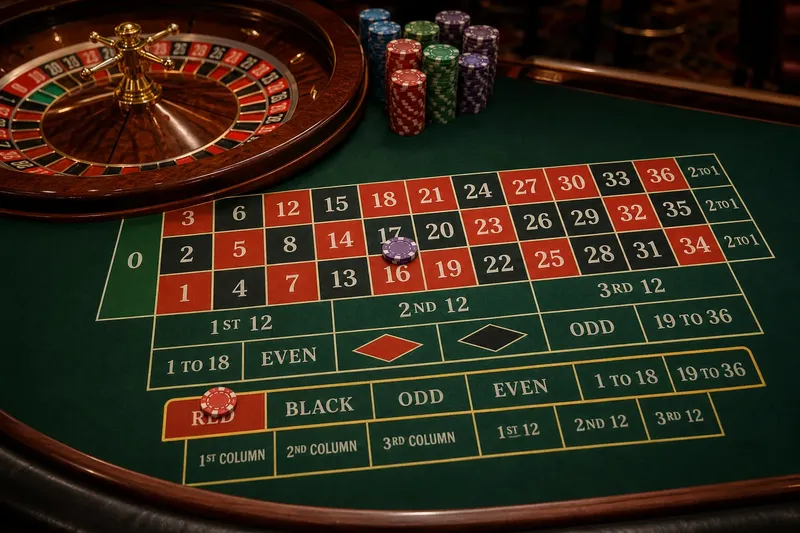
This distinction also helps prevent a familiar historical shortcut: reading every card table as a step toward the modern casino. A shared room could host cards without making gambling its principal business, but that interpretation should rest on details from the account, not on the venue’s label alone.
The room’s other activities help clarify the role of cards
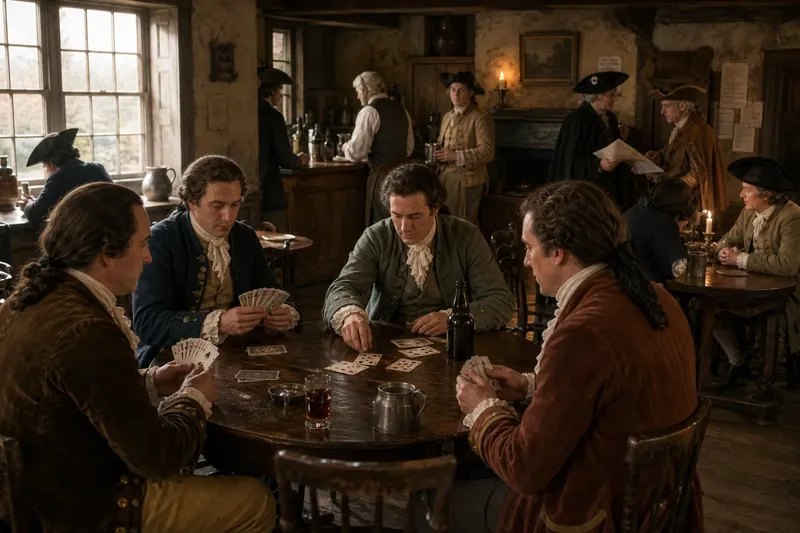
A description of food, drink, conversation, business, or travelers alongside card play can support the interpretation that cards were one activity among several. It does not, by itself, establish whether the game involved wagers. Likewise, a source that calls a venue a gaming establishment supports a more focused description of its purpose, while leaving its layout and customs open unless those are recorded.
Imagine an invented account of an inn that mentions guests talking over refreshments while a card game takes place at a shared table. The observable details are several uses of one room and the presence of cards; the careful conclusion is that play occurred alongside other activity, while wagering remains unknown. If the same invented account instead says the establishment was devoted to gaming, the description supports gambling as central to that venue, but still does not tell us the rules or who was admitted.
It is not worth forcing homes, inns, clubs, and gaming establishments into a single progression from informal gathering to casino. Different kinds of rooms could coexist, and a source may describe only one of them.
Check the evidence before describing a venue
Use each documented detail to make a limited decision about what the account supports. These checks help keep interpretation close to the record:
- If the account names a household host, describe the game as part of a privately arranged gathering; if it does not, leave the identity of the organizer unspecified rather than inventing a host.
- If the account explicitly places cards alongside food, drink, conversation, or business, describe gaming as one activity among several; if it describes a dedicated gaming room, identify gambling as more central, while leaving unmentioned details open.
- If the account states membership or admission rules, use them to describe that access boundary; if no rule appears, call access unknown rather than assuming either open admission or exclusion.
- If the account links a proprietor’s business to offering games, describe that commercial connection; if it does not explain the proprietor’s role, avoid assigning a motive.
- If the account explicitly mentions spectators, describe them as part of that particular scene; if it mentions only players, do not add an audience.
- If the account gives a place and period, keep the interpretation within that setting; if either is absent, qualify the claim and avoid presenting it as a general custom.
What can the setting tell us about card play?
Were cards always played for money?
No. Cards could be used for recreation or conversation, and some games involved wagering. For a specific gathering, state whether money was involved only when the account supports that claim.
What distinguished a gaming venue from an inn?
The distinction depends on what the source says about the establishment’s purpose. An account that identifies gaming as central supports that description; an inn where cards appear among other documented activities should not automatically be called a gambling business.
Did public rooms welcome everyone?
The phrase “public room” does not establish universal access. Use documented admission rules or social boundaries where available, and mark access as unknown when the account provides no such evidence.
Did dedicated gaming venues replace social card games?
The existence of a gaming venue does not by itself show that card play in homes or other gathering places ended. Describe coexistence or change only when the relevant account or historical evidence supports it.
Keep historical claims tied to their sources
Card play in public rooms is best understood through the relationships among players, hosts, proprietors, spectators, and people admitted to the room. A home, an inn’s common room, a club, and a dedicated gaming space could give cards different roles, but the record must establish those differences for each case.
When writing about card play in public rooms, name the place and period if the evidence supplies them, then separate what the account states from what remains uncertain. That distinction is useful in its own right: it lets readers see both the limits of the historical claim and the specific details that support it.